
Brand architecture explained simply: why it matters and how companies use it
Ever wonder why Tide, Pampers, and Gillette never mention the company that owns them (Procter & Gamble)? Or why every Marriott hotel has a totally different name, but a Google product is always just "Google Something"?
That's not an accident. It's called brand architecture, and it's really just a fancy way of saying "how a company organises its brands and products so people aren't confused about what they're buying."
What Is Brand Architecture, Really?
Think of a company like a family. Brand architecture is how that family decides on last names.
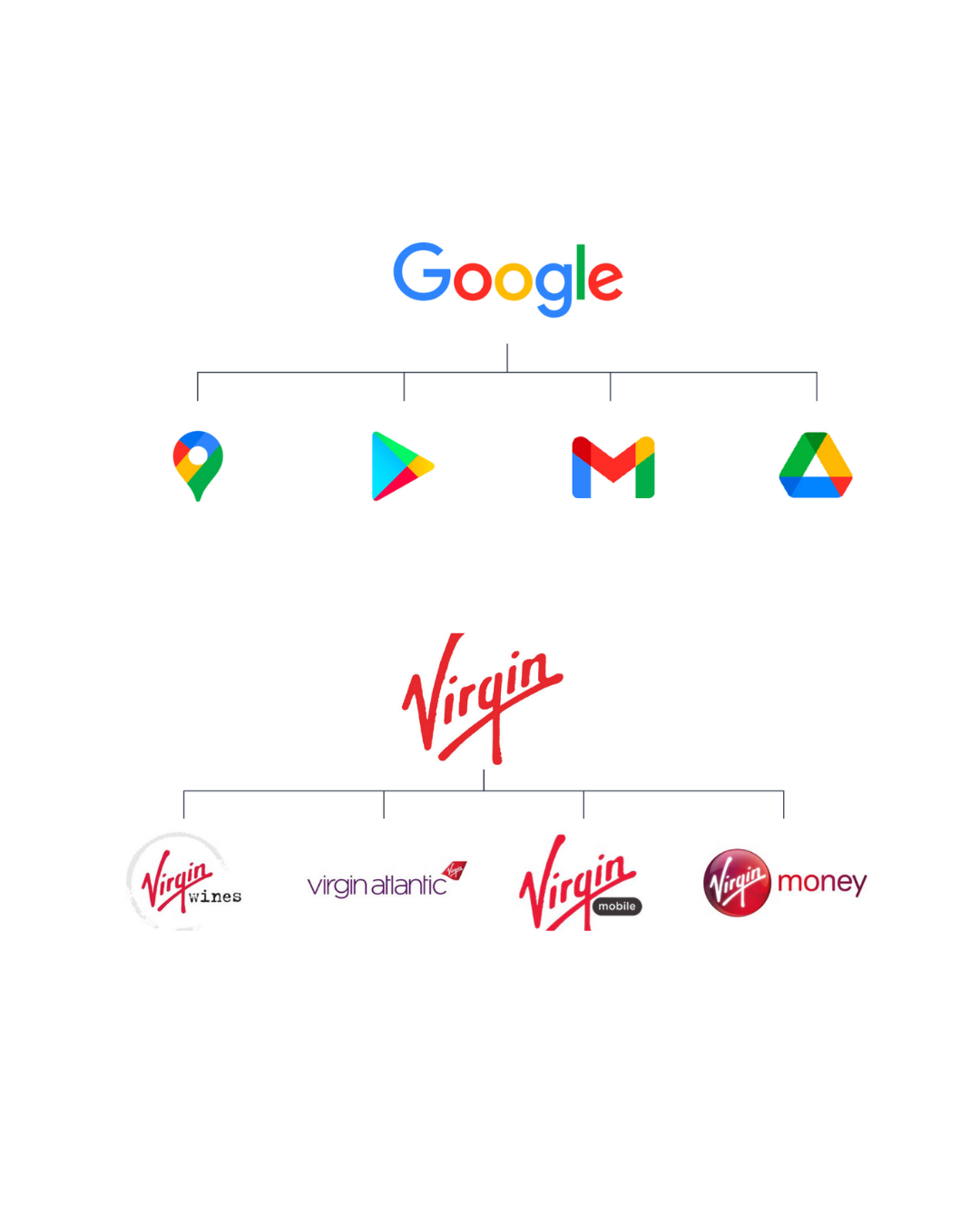
Some families give everyone the same last name so it's obvious they're related (that's Google, Google Maps, Google Photos, Google Drive, all clearly part of the Google family).
Other "families" let each member go by a completely different name, with no obvious connection at all (that's Procter & Gamble, most people have no idea Tide and Gillette are made by the same company).
Neither approach is right or wrong. It just depends on what the company is trying to achieve
Why Should Anyone Care About This?
Because it directly affects you as a customer, and it directly affects the company's bottom line. Here's why it matters:
1. It saves customers from confusion. When a company is clear about how its products relate to each other, you instantly know what you're getting. You don't have to guess whether a new product is trustworthy, cheap, premium, or a totally different thing.
2. It builds trust faster (or protects it). If a company already has your trust, putting that same name on a new product lets that trust rub off instantly. Think about how much easier it is to try a new Google app versus a random unknown app, the name alone tells you it's probably reliable.
3. It protects a company when something goes wrong. On the flip side, sometimes a company wants distance. If a budget product has a scandal, a company doesn't want that dragging down its luxury brand too. Keeping brands separate is like keeping your reputation in separate boxes, if one box has a problem, the others stay clean.
4. It helps a company grow without confusing people. When companies expand into new products, new markets, or buy other companies, they need a plan for how those new things fit in. Without one, you get messy, confusing branding (think of a company with five random-sounding sub-brands that don't seem to relate to anything).
5. It saves money. Building a brand from scratch, a name, a logo, a reputation, customer trust, is expensive and slow. When a company can reuse an existing, trusted brand name instead of starting over every time, it saves a huge amount of time and marketing budget.
The Main Ways Companies Organise Their Brands
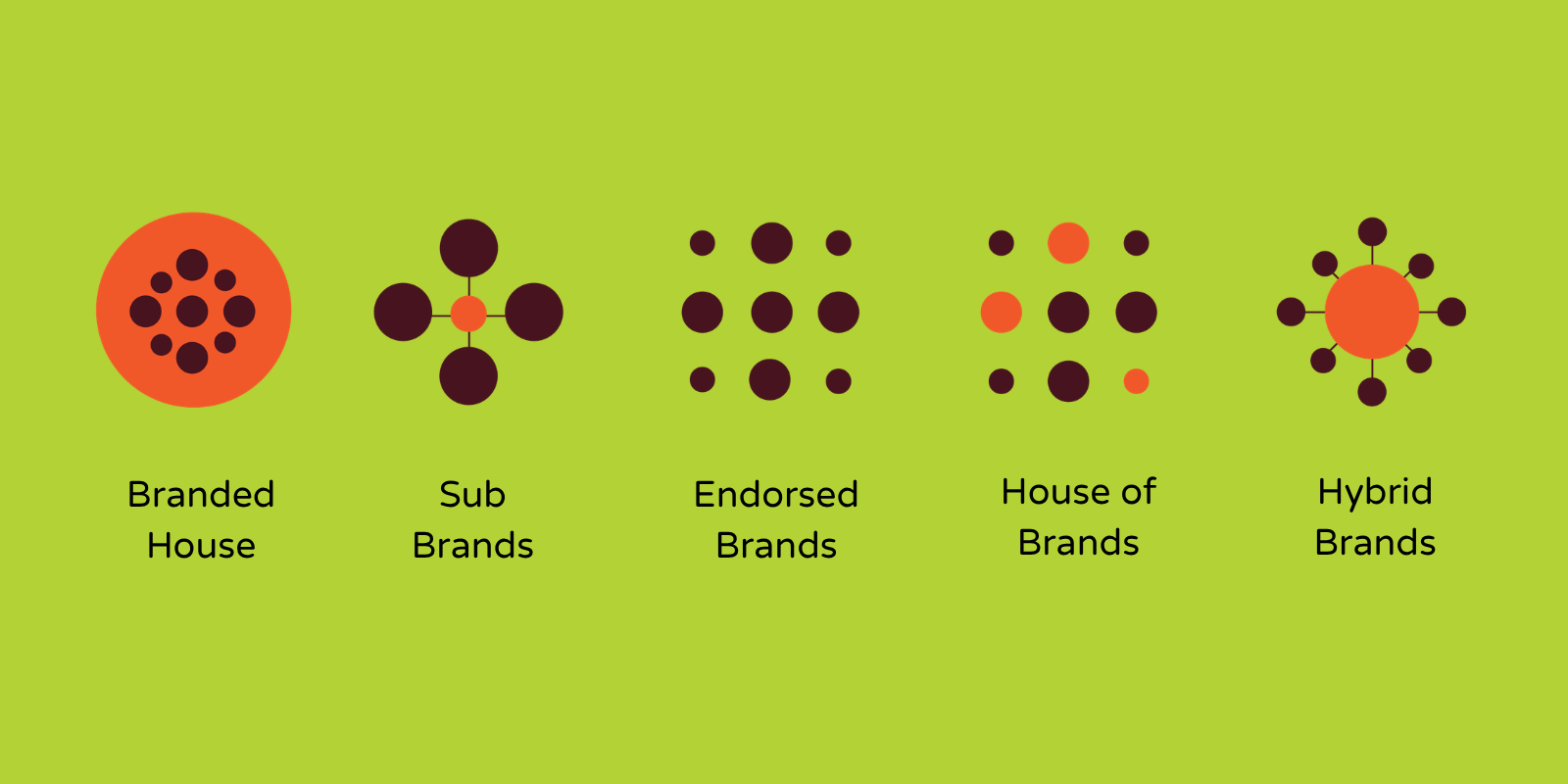
There are a few common approaches. Here they are in plain English:
1. One Big Name for Everything ("Branded House")
Everything the company makes uses the same core name. New products borrow instant trust from the main brand.
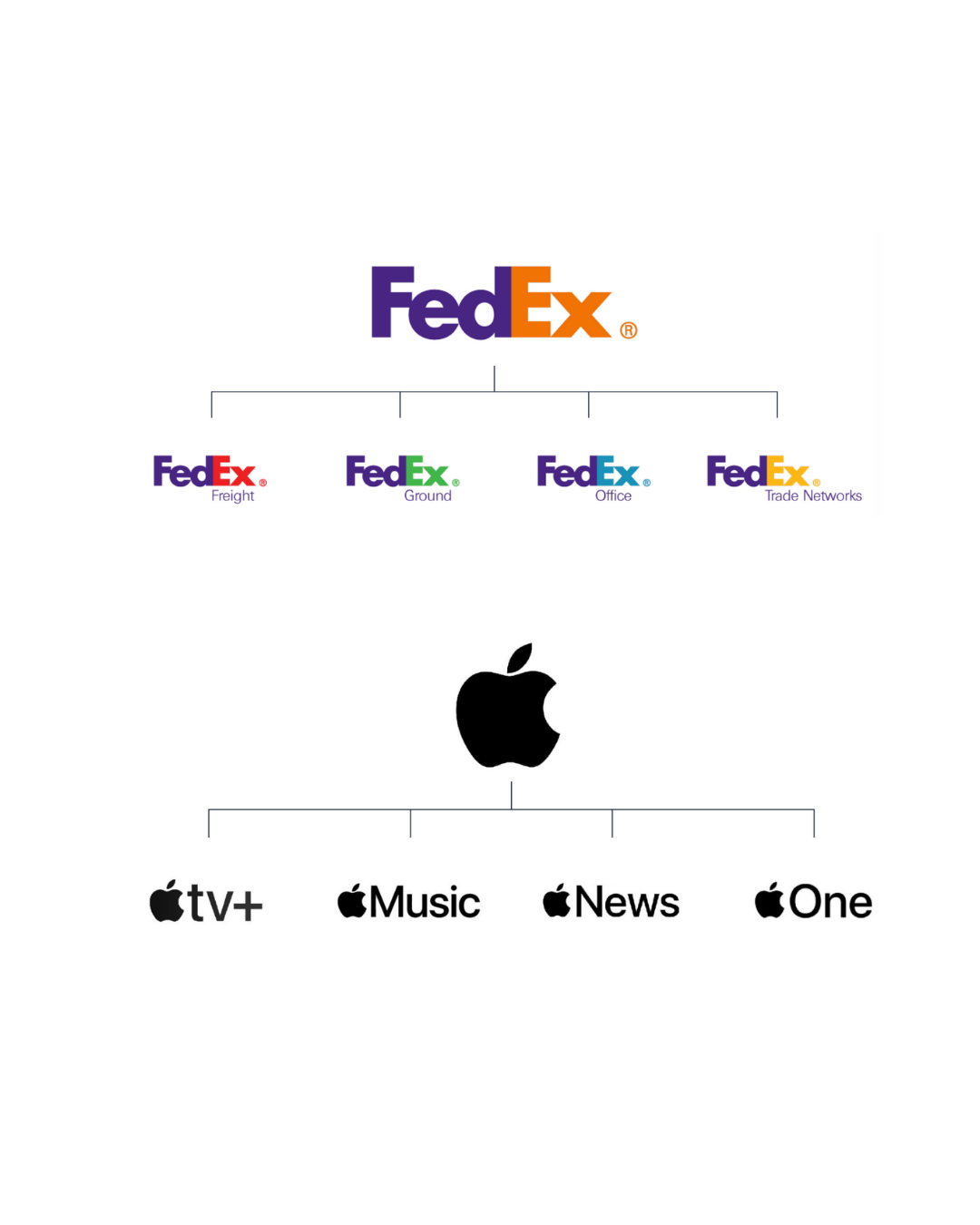
Real-life example: FedEx. Whether it's FedEx Ground, FedEx Express, or FedEx Freight, you know exactly who you're dealing with and what kind of company it is.
Good because: Cheaper and simpler, one reputation to build and protect. Risky because: If something goes wrong with one part of the business, it can hurt the whole brand's reputation.
2. Totally Separate Names ("House of Brands")
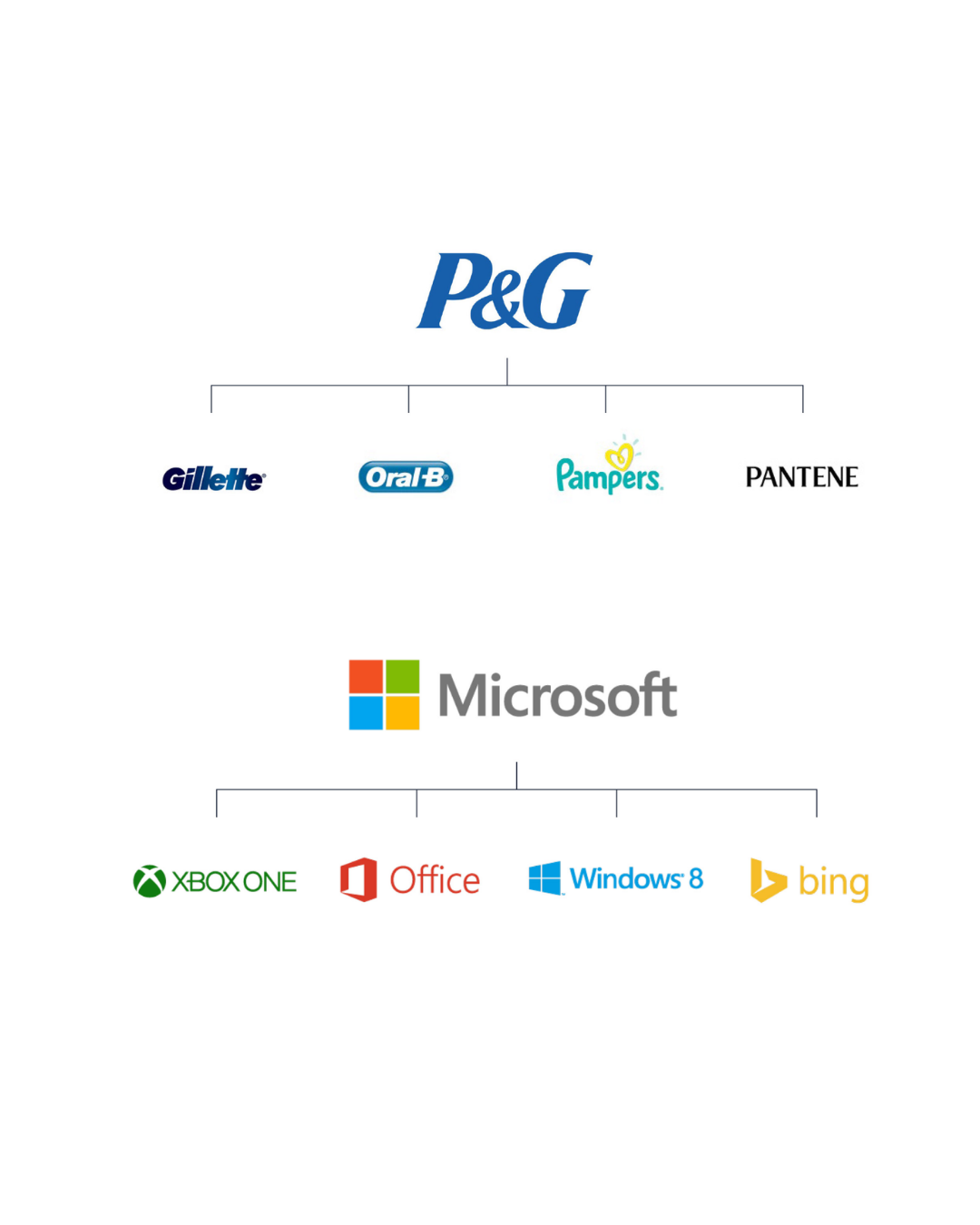
The company stays hidden in the background. Each product has its own name, look, and personality, and most customers have no idea they're connected.
Real-life example: Procter & Gamble owns Tide, Pampers, Gillette, and Olay, but none of them mention P&G anywhere.
Good because: Each product can be tailored perfectly to its own audience, and problems with one brand don't spill over onto the others. Risky because: It's expensive, you're basically building a brand new reputation from zero for every single product.
3. Name + "By" the Company ("Endorsed Brands")
This is the middle ground. A product has its own identity, but the parent company's name appears somewhere as a stamp of approval, like "by Marriott" or "powered by."
Real-life example: Courtyard by Marriott. It's clearly its own hotel brand, but the "by Marriott" part reassures you it's backed by a company you already trust.
Good because: New products get to stand on their own while still borrowing some trust from the parent company. Risky because: It requires careful balancing so people don't get confused about which name actually matters.
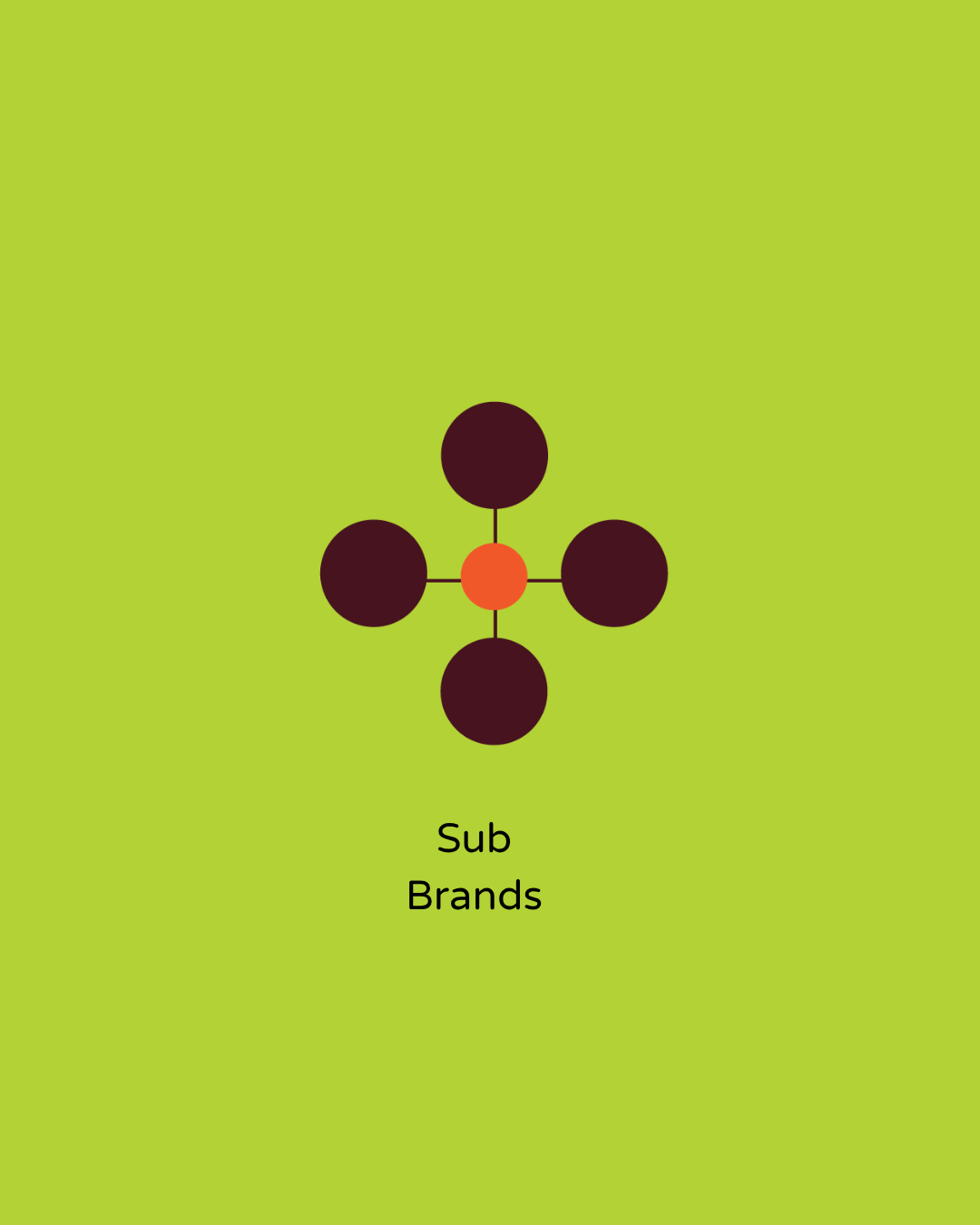
4. A Product Made Specifically "For You" (Sub-Branding)
This is very similar to the one above, but it goes a step further, the product isn't just endorsed by the parent brand, it's built in real partnership with it, aimed at a very specific group of people.
Real-life example: Dove Men+Care. It clearly comes from Dove (so you trust it), but it's designed and marketed specifically for men, so it doesn't feel like "just the same Dove stuff, but repackaged."
Good because: Lets a company reach a brand-new audience without losing the trust it already has. Risky because: This only works if the parent brand is already strong enough to lend that trust in the first place.
5. A Bit of Everything (Hybrid)
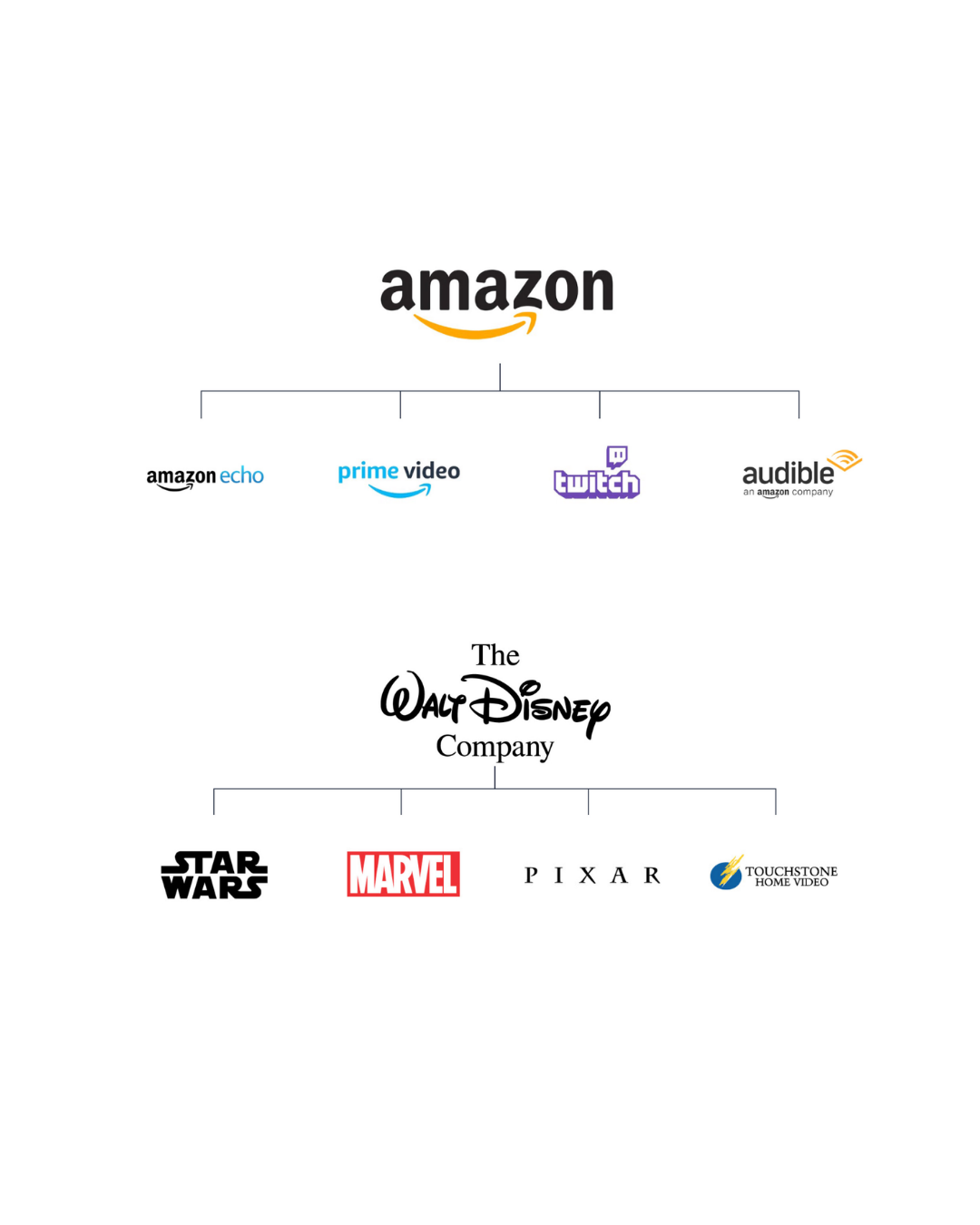
Most big companies don't stick to just one approach. They mix and match depending on the situation, some products get the full company name, others are kept totally separate, especially after buying another company.
Real-life example: Alphabet (Google's parent company). Google itself uses one big shared name for most things, but experimental projects like Waymo (self-driving cars) operate completely on their own.
Good because: Gives the flexibility to treat each part of the business differently based on what makes sense. Risky because: Without careful planning, it can turn into a messy, inconsistent grab-bag of brand names that even the company itself struggles to explain.
Personal Branding: When You Are the Brand
Personal branding applies the same logic to individuals: some people build one unified name that carries every project (a freelancer whose own name is the business), while others lend their name to endorse a separate venture (an influencer's product line), operate as the recognisable face inside someone else's brand (a company spokesperson), or blend both depending on the moment (a consultant known by name and by firm). The tighter the tie to a single identity, the more efficient it is to build, but the more exposed that identity is if something goes wrong; the looser the tie, the more protection, but the less trust automatically transfers.
So... Which One Should a Business Use?
There's no single "correct" answer, it comes down to a few simple questions:
Are the products similar, or totally different? Similar products (like Google's apps) do well sharing one name. Very different products (skincare vs. laundry detergent) usually do better staying separate.
Does trust matter a lot here? In areas like hotels, banking, or healthcare, people want to know a trusted name stands behind something new, so an endorsed approach often works well.
Is the company growing by buying other companies? If so, it often makes more sense to keep those acquired brands separate rather than force everything under one name.
Can the company actually afford a whole new brand? This is the question people skip the most. A brand-new name means a brand-new website, new marketing, new trust to build from zero. Before creating a new brand, it's worth asking: do we really need a new one, or can we afford to properly support (or "feed") it if we create it?
A few signs a brand new name is actually worth the investment:
The current brand just isn't believable in this new area (a pen company selling underwear, for example, would confuse people)
The new product genuinely clashes with what the brand already stands for
The pricing is wildly different (a budget brand can't easily launch a luxury product under the same name)
The people the company is trying to reach don't relate to the existing brand at all
If none of those apply, it's almost always faster, cheaper, and smarter to just use the brand a company already has.
Where this leaves you
Brand architecture might sound like a technical business term, but really it's just about making sure people aren't confused about what a company is offering and who's behind it. Done well, it builds trust faster, protects a company's reputation when things go wrong, and saves a ton of time and money along the way. Done poorly (or not thought about at all), it leads to confused customers, wasted marketing dollars, and brands accidentally competing against each other.
If you want to have a conversation. Book a discovery call.

Ready to build a brand that doesn’t look the same as everywhere?
Whether you are just starting out or have been in business for years, it is never too early or too late to get your brand right.
We help businesses of all sizes build brand guidelines, style guides, and style sheets that make showing up easy, consistent, and confident, every single time.
Let's talk about where your brand is today and where you want it to go.
👉 Book a free conversation with us today
No pressure. Just a simple chat to see how we can help.
Want to get all the juicy goss about branding and illustration straight to your inbox?
Sign up for the newsletter and receive monthly newsletters!
Just like Mr Magorium’s Wonder Emporium, where we share a variety of (branding and illustration) tips that bridges the gap between designers and business owners.
