
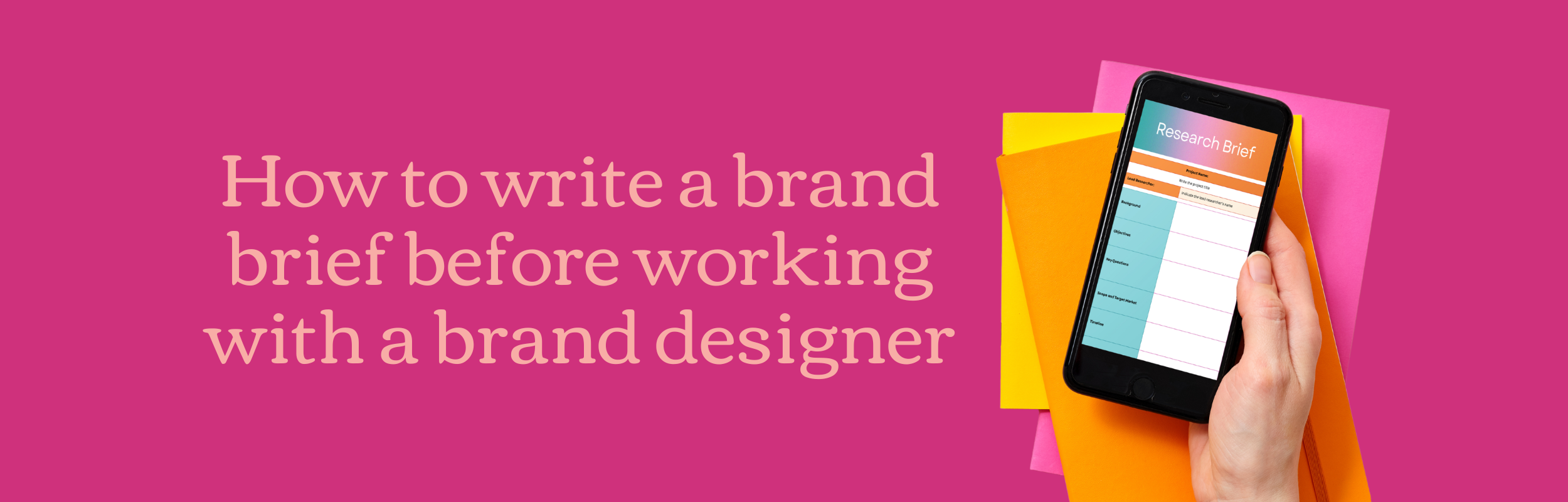
How to write a brand brief before working with a brand designer
Bite-size takeaways…
In case you don’t read the whole blog here are the main points:
Your designer isn't psychic. A brand brief is the creative map that sets your whole project up for success, skip it and you're guessing.
Know your people before you brief your designer. Describe your ideal customer like a real person, not a demographic. The more vivid the picture, the better the outcome.
If your brand were a person, how would you describe them? Pick 5–8 words it IS. Then 2–3 it's absolutely NOT. Both lists are gold. 🎯
A good brief doesn't limit creativity. It gives it somewhere meaningful to go.
So, you've decided to invest in your brand. You've found a designer you love, you're excited, and you're ready to get started. But then comes the question that trips up so many business owners:
“So… what do you actually need from me?”
Here's the thing, a great designer can work magic, but even the most talented creative minds aren't psychic. The more clearly you can communicate your vision, your values, and your goals upfront, the better (and faster!) the final result will be.
That's where a brand brief comes in. Think of it as the creative map you hand your designer before the journey begins. It sets the direction, saves you time, reduces back-and-forth, and means you're far less likely to end up with a brand that makes you go, 'Hmm... this isn't quite it.'
Ready? Let's break it down.
What is a brand brief, anyway?
A brand brief (sometimes called a creative brief) is a document that gives your designer a clear, structured overview of your business, your audience, your goals, and the look and feel you're after.
It doesn't need to be a 30-page thesis. It just needs to answer the right questions — honestly and with as much detail as you can muster.
What to include in your brand brief
1. Business Overview
Start with the basics. Your designer needs to understand your business before they can represent it visually.
What does your business do?
What products or services do you offer?
How long have you been operating?
What's your business model (B2B, B2C, product, service)?
Keep it concise, but don't undersell yourself. Your story matters.
2. Your Why
What drives you? What problem are you solving? What made you start this business in the first place?
This is where the soul of your brand lives, and it's often the most overlooked part of a brief. A designer who understands your 'why' can create something that feels authentic, not just aesthetically pleasing.
Tip: If you've never articulated your 'why' before, Simon Sinek's Golden Circle is a great place to start.
3. Your Target Audience
Who are you trying to reach? Get specific. Vague answers like 'everyone' or 'women aged 25-45' don't give your designer (or you!) enough to work with.
Try describing your ideal customer as a real person. What do they care about? What are their frustrations? Where do they hang out online? What other brands do they love?
The more vivid the picture, the better your designer can tailor the visual identity to speak directly to that person.
4. Your Competitors (and How You're Different)
List 3–5 competitors or businesses in your space. Your designer needs to know what's already out there so your brand can stand apart, not accidentally blend in.
Also note: what makes you different? What do you do better, differently, or in a way nobody else does? This is your differentiator, and it should be baked into your brand identity.
5. Brand Personality & Values
If your brand were a person, how would you describe them? This exercise sounds a little woo, but it's genuinely one of the most useful things you can do.
Choose 5–8 adjectives that describe your brand. Then choose 2–3 that it is absolutely NOT. Both lists are equally valuable.
• Warm, playful, and approachable - but not childish
• Bold and premium - but not cold or intimidating
• Minimal and editorial - but not sterile
Also think about your core values, what does your business stand for? These should underpin every visual and strategic decision.
6. Visual Direction (Even If You're Not Sure)
You don't need to know exactly what you want. That's what your designer is for! But sharing any visual references, brands you admire, colours you're drawn to, things you definitely don't want, gives your designer a starting point.
A mood board on Pinterest or even a handful of saved Instagram posts can be incredibly useful. You can also describe the feeling you want people to get when they see your brand: luxurious? fun? trustworthy? earthy?
Note: Loving a brand's visual identity doesn't mean you want to copy it, it just signals the direction, the feeling, or the quality level you're aiming for.
7. Project Scope & Deliverables
Be clear about what you actually need. Do you want a full brand identity system, or just a logo? Do you need social media templates, packaging design, or a brand style guide too?
The clearer you are about scope upfront, the easier it is to get an accurate quote and avoid scope creep later.
8. Timeline & Budget
Yes, we know, budget can feel awkward to talk about. But sharing a ballpark figure actually helps your brand designer recommend the right package, be honest about what's achievable, and avoid wasting both your time.
Same goes for timeline. Do you have a hard launch date? Are you flexible? Knowing this early helps everyone plan accordingly.
A few final things before you hit send
Once your brief is drafted, read it back and ask yourself: Could someone who has never met me understand my business from this document?
If the answer is yes, you're in good shape. If not, go back and add a little more colour.
"A good brief doesn't constrain creativity,
it gives it somewhere meaningful to go."
And remember, a brief is a starting point, not a contract. A good designer will ask follow-up questions, push back where needed, and bring ideas you hadn't even considered. That's the magic of collaboration.
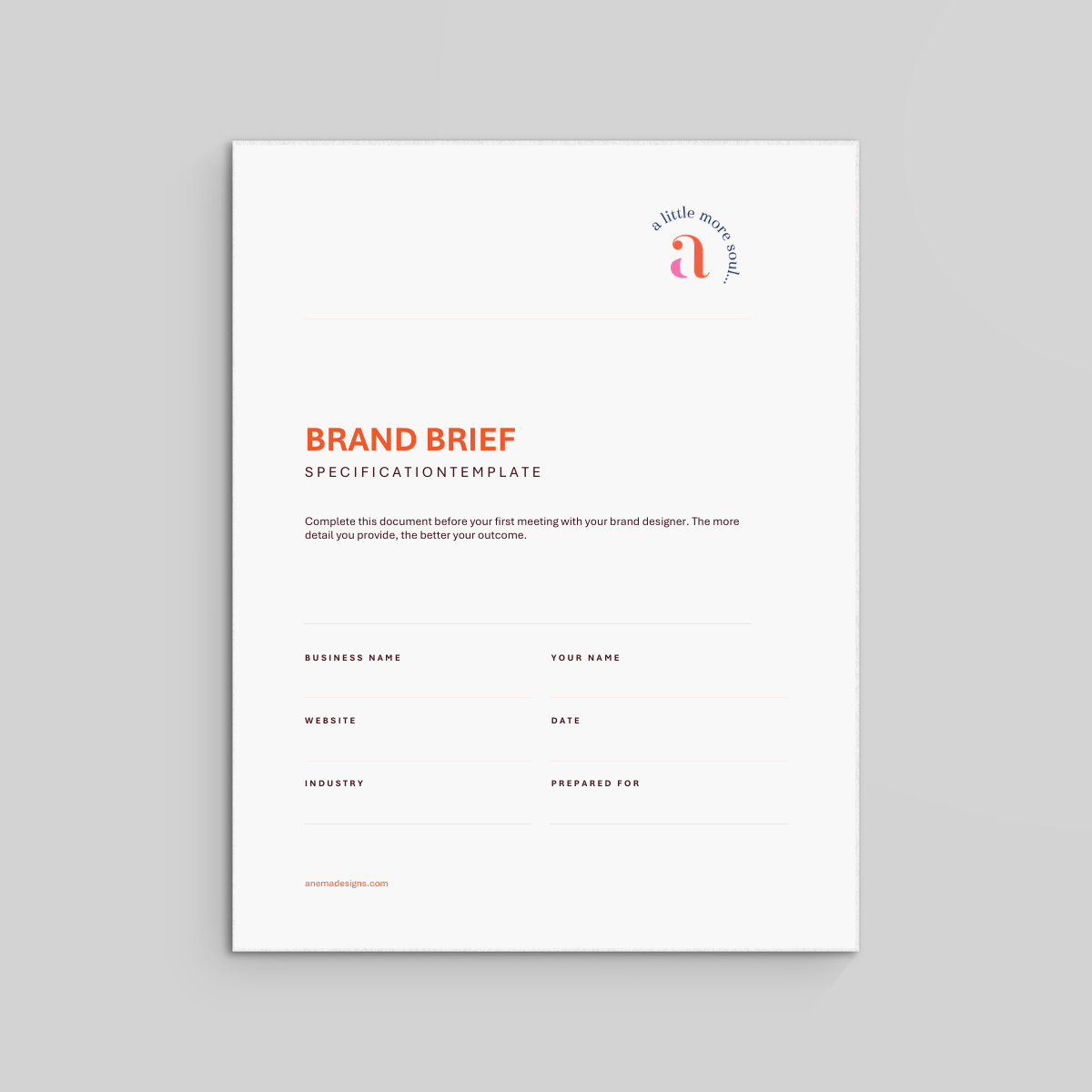
Download your free brand brief template
We've turned everything in this post into a ready-to-fill Brand Brief Specification — a clean, structured document you can complete before your first conversation with any designer (including us).
No design skills needed. No Canva required. Just open it, fill it in, and arrive at your first meeting prepared, confident, and ready to build something great.
Ready to work together?
At Anema Designs, we guide every client through a thorough discovery process before a single pixel is placed. But the more you can bring to the table from the start, the more fun (and effective!) the whole process becomes.
Thinking about investing in your brand identity? Book a clarity call with us, or fill in a request for quote which is our web version of the brief specification, we'd love to hear about your business and what you're working toward.
Want to get all the juicy goss about branding and illustration straight to your inbox?
Sign up to our monthly newsletter today!